Women in the War
Margaret Slater (née Towle)
2100873 TOWLE M.F - Radar Operator 1944-1947

|
Women in the War Margaret Slater (née Towle) 2100873 TOWLE M.F - Radar Operator 1944-1947
|
||
|
|||
        
|
70 Wing HQ - Bunchrew and Tealing In August 1945, shortly after VJ Day I was posted to 70 Wing HQ to be 'misemployed' as a Clerk in the Release Office. We processed the paperwork for the RAF and WAAF in from the outstations to be demobbed and to return to 'Civvy Street'. A week after we arrived at RAF Bunchrew the whole Wing HQ was moved to Tealing, ner Dundee. Bunchrew was a large country house set in its own grounds with beautiful views across Beauly Firth. Tealing was an airfield, although no longer operational. The WAAF site was more than a mile from the main camp so we were issued with bicycles to get us to and from our offices and the cookhouse. It was a very different life from that at Dunnet Head. We worked from 0830 to 1700 Monday, Tuesday, Thursday and Friday. On Wenesday we finished at 1300 hours and the afternoon was taken up with netball, hockey or tennis. On Saturday too we finished work at 1300 hours. There was a cinema on camp where the film changed twice a week, and Dundee was within easy reach by bus. This was a veritable metropolis compared with Thurso: three or four cinemas,an excellent repertory theatre with a change of programme each week, and Keillers Cafe, one of our favourite haunts, where we would sit for hours over a teacake and a pot of tea. In spite of all the advantages of this more civilsed life I really missed being on radar and working a watch system. However after ten months at Tealing I was on the move again. Pen Olver This time I was posted to 78 Wing HQ at Ashburton to go back on to radar. At HQ I was given the choice of going either to Ringstead, near Weymouth, or to Pen Olver on The Lizard. Without a moment's hesitation I chose Pen Olver so that I could say that I had been stationed on the most northerly point on the mainland and on the most southerly point. Pen Olver was a CHL station situated close to The Lizard lighthouse but it was no longer a domestic site. We lived at RAF Drytree on Goonhilly Downs. This had been a CH station but at this time, the early summer of 1946, it was not operational. We girls were billeted in huts which had been divided into rooms with three or four airwomen in each - a pleasant change from RAF Tealing's huts housing 25-30. Added attractions were plenty of country walks, delightful rocky coves in which to swim or sunbathe, and Helston only a short bus ride away. All in all, my stay there felt almost like a summer holiday, and I decided I could very happily spend the rest of my Service life there. However, it was not to be. Ten days after my arrival it was announced that the station was being closed down, so after two weeks I set off once more on my travels, this time to 75 Wing HQ at Detling, near Maidstone. Bawdsey From Detling I was posted to Bawdsey. 'The Home of Radar', where Sir Robert Watson-Watt had developed this 'secret weapon' just before the war. In fact it was at that time that I first heard of this so-called Death Ray. At school my best friend had gone with her family to Felixstowe for their summer holiday. They returned home with the strange story that there were giant towers like pylons which emitted rays that caused car engines to stop with no warning and for no apparent reason. These, they said, would be used in the event of war to stop the engines of German aircraft flying towards the east coast.
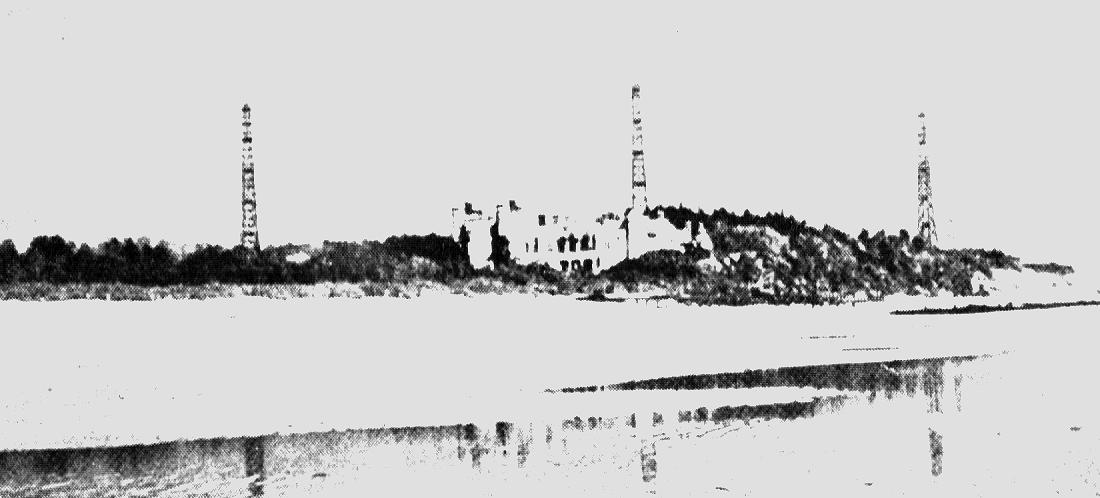
Towers at Bawdsey Manor For more information on radar research and CH / CHL Stations please visit the Radar Research pages on this website Bawdsey was both a CH and CHL station. Bawdsey Manor was a vast Victorian mansion with over a hundred rooms which in its heyday had been a favourite retreat of King Edward VII and Lily Langtry. (This snippet of information I learned only in 1991 when I went to a Bawdsey Reunion Lunch and we had permission to go into the Manor which was then empty and up for sale). Before the war it had been the home of the composor Roger Quilter, prior to being bought (or was it commandeered?) by the RAF. Lady Quilter still lived on the estate in one of the lodges. The WAAF headquarters were in the Manor itself, along with the Sick Bay and the Orderly Room, etc. Once again I found Bawdsey a very different station from any of those I had previously served on. I was there for 15 months, from June 1946 to September 1947, and this was a transition period as we all started adapting to peace-time conditions. Soon after my arrival I was sent to RAF Digby for a month's Discipline Course for Junior NCO's. I did not enjoy the course but to pass out with two stripes and a rise in pay made it all seem worth while. Click here to read on about Margaret's time at Bawdsey and in the WAAF
|