Women in the War
Helen
Hoey - Training and Service in the WRNS- Royal Naval Air Service (RNAS)
1943-1946

|
Women in the War Helen
Hoey - Training and Service in the WRNS- Royal Naval Air Service (RNAS)
|
||
|
|||
        
|
After passing medical and educational examinations, my application to join the Women's Royal Naval Service was approved. A 2 week induction course followed at HMS Daedulus III, Mill Hill, London.
Joining the WRNS This consisted of lectures on the history and traditions of the Royal Navy and instruction in all the basic skills required, such as signals, knots, boats, etc… not forgetting all the Naval jargon. Then followed an interview with a WRNS officer who advised me that having passed the course and been classed as suitable for engagement, nevertheless I was free to leave at this stage if I so wished. This was a two-way arrangement. If the WRNS was not satisfied as to the suitability, the service was free to arrange a prompt return to "civvy street".
RNAS Training centre The officer, having established that both parties were happy, then advised me there were only Air Mechanic (AM) categories available in the Fleet Air Arm (as the RNAS was generally known.) Four to be precise, rapidly reduced to two when a "signal" was received so that effect, namely; Air Mechanic (Airframes) and Air Mechanic (Ordnance)- known as Weapons Engineers in today's RNAS. Predictably, I chose AM (O) but suspected that I had been railroaded. There was no way any previous engineering training and experience should be wasted by the RN.
Uniform Then fully kitted out with uniform (obviously, no uniform was provided until mutual satisfaction was established) I was packed off to the RNAS station, HMS Fledgling, Mill Meece, in Staffordshire, for an intensive 5 month training course.
Training The instructors were senior NCOs (non-commissioned officers) who had fought through the siege and battle of Malta, and they taught all we needed to know as AM (O)s. This involved classroom instruction and practical work in arms and the arming of various aircraft.
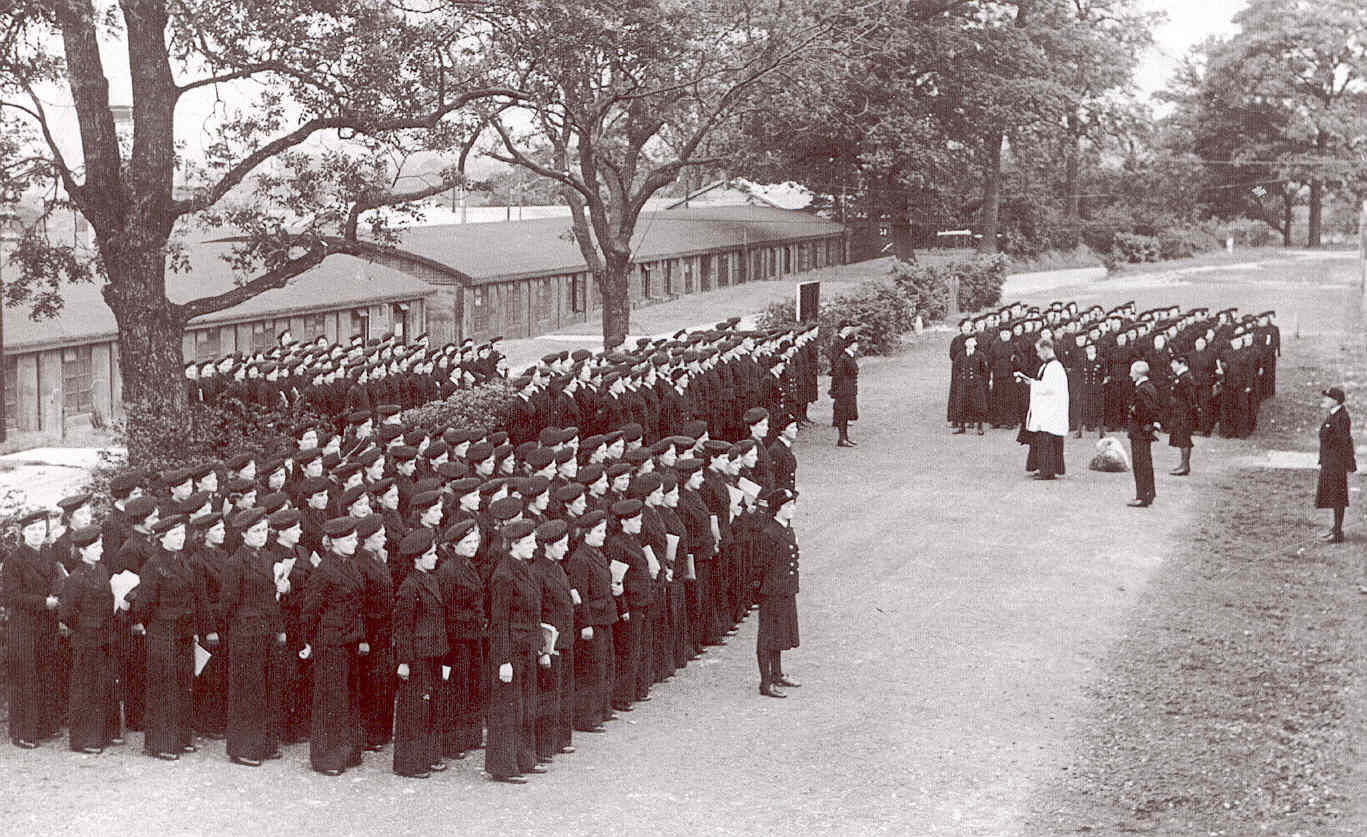
Wrens Morning Divisions
We were taken over to nearby Newcastle-under-Lyme for forge work in annealing, tinning, brazing etc…and machine-shop work. In all of which I was already experienced, which the instructors quickly noted and tended to put me aside. So for me it was mainly a refresher course. After passing the written and practical examinations, I was qualified as an AM (O) specialist, with a high marking and recommended for accelerated advancement.
Helen's father had words with her about flying I was then drafted to HMS
Merlin, Donibristle, Scotland, close to the Forth Bridge and Rossyth
Dockyard. Some of my colleagues were disappointed to learn that Donibee
(as it was known in the RNAS) was a servicing, not an operational station.
Workshop Forge Training
Dispersed Weapons Party
The aircraft were stripped of their guns. Each Seafire had six guns. Four 303 Brownings and 2 20mm Hispano cannons. Those needing a barrel changed were sent up to the station armoury. The rest were dismantled, all parts checked, cleaned and re-assembled and replaced in the aircraft, together with those returned from the station armoury. The aircraft was then taxied to the gun alignment section, set up on trestles and with the use of spirit levels checked that it was perfectly level. With the aid of an "upside-down" periscope inserted into the breech, each gun was aligned with the marking rings which were painted on the side of a hanger.
Fighting Servicing Sector Click on the phono images to hear the whole story of one incident at the station.....
Once this was completed and the guns locked into position the aircraft was taxied to the butts, again set up on trestles, levelled and prepared for butt-testing. All gun breechblocks were cocked, ammunition belts were fitted in, then a final check was made that all blast-tubes encasing the barrels were in place. Red flags were in position all around the butts and a larger red flag was hoisted above the butts to indicate to all personnel that firing was imminent. A warning was sounded, then standing on the port wing I would press the red button in the cockpit to open fire- 2 short bursts and if all the guns performed ok, i.e. no stoppages (the belt-feed mechanism on the 20mm cannon was the main problem in this regard- new ammo belts were fitted, breechblocks were re-cocked, gun covers replaced on the wings. Finally, the aircraft's camera was fitted into the port wing.
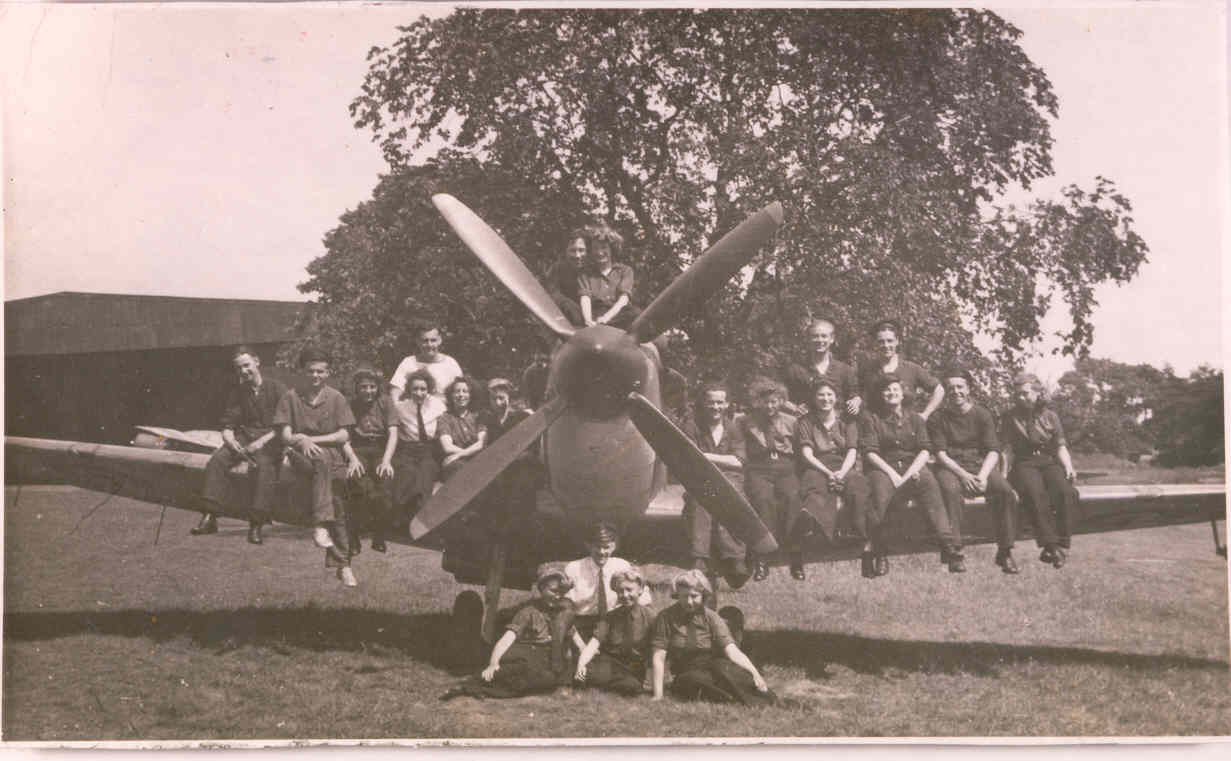
A 'Happy Gang'! Helen remembers an incident when there was a 'flap on'. 
'Flap on' As the leading Wren AM (O) I could then go into the hanger and sign the Form 700, for which one had to be qualified. No aircraft could leave until all the qualified mechanics-ordnance, engines, airframes, electrical and radio, had signed the form.
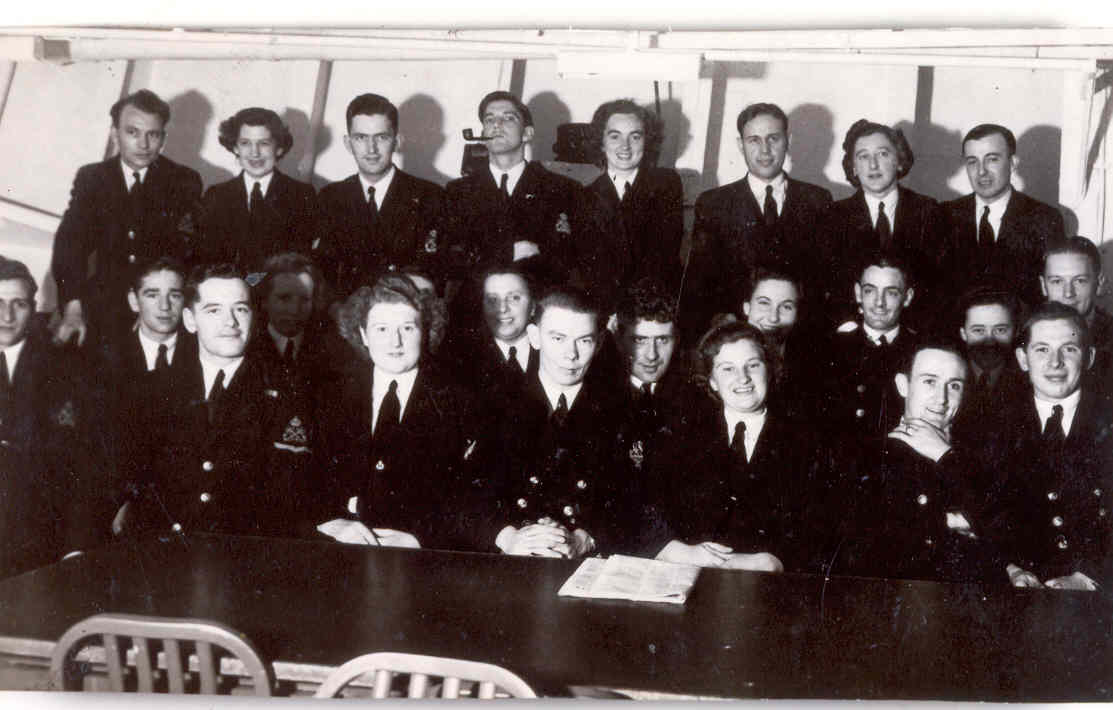
Petty Officers Mess The aircraft was then taxied away from to await its pilot. (Taxying was the responsibility of Petty Officer Pilots) From my "Employment and Ability Record" which was enclosed with my discharge papers, I note that I was marked as having "Specialist Knowledge of Fighter Defence Weapons" and "Efficiency" was marked as "Superior".
Women Accepted Fighter Defence was my main workplace, but at times I also worked on TBR (Torpedo, Bomber, Reconnaissance). The aircraft were mainly the American Avenger, the Swordfish and the Barracuda. Also, with my senior NCO, Flight Sergeant Fry (seconded from the RAF) I trained rookie sub-lieutenants in the stripping and equipping of fighter aircraft and with a Naval NCO, Petty Officer Robertson, trained Naval Airmen (unqualified grades) in perimeter defence, gunnery, small arms etc… Helen recalls different aspects of being a WRNS...
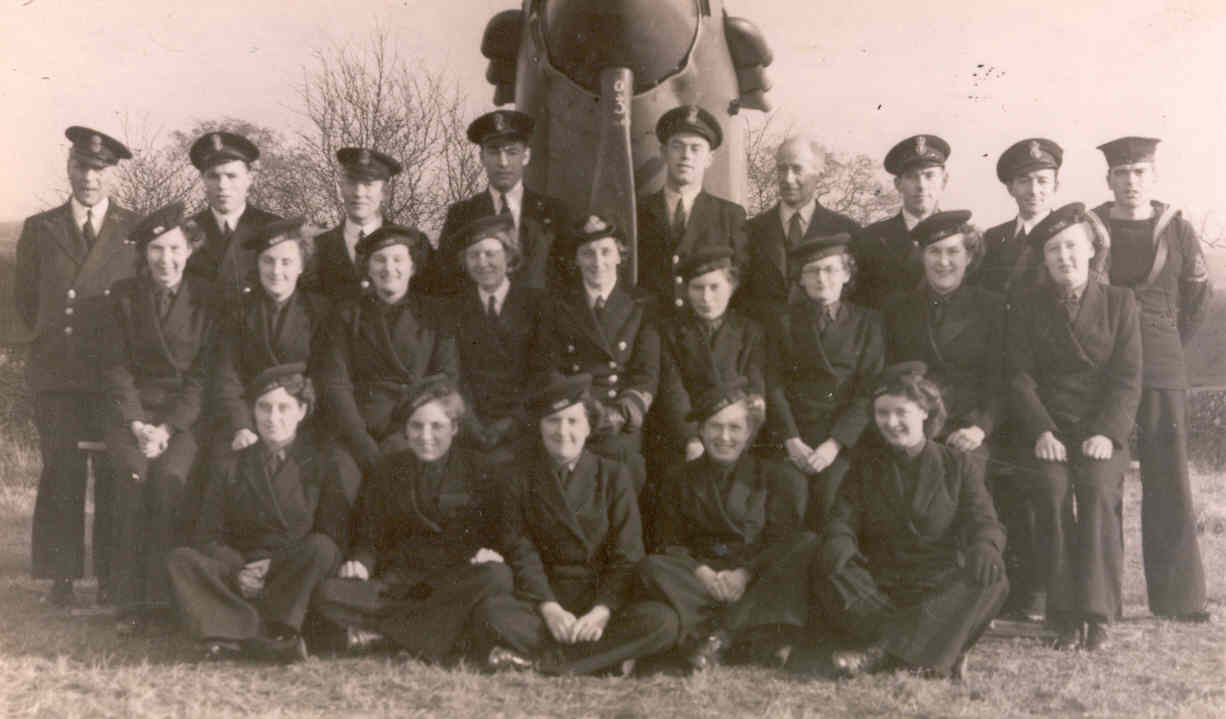
HMS Merlin I enjoyed my time in the WRNS, working alfresco mostly in all weather. Even though some of the Naval Airmen resented taking orders from Wren Air Mechanics, we had the respect of most and of the male air mechanics whom we outnumbered, and the NCOs (both Naval and RAF) and Air Gunnery Officers. Flight Sergeant Fry remarked that the female mechanics were more committed and responsible and that their attention to detail was superior to that of the average male mechanic. Helen recalls some aspects of WAAF life...
Wren PE The work, with exception
of periods spent in the station armoury and during professional exams
for Leading Wren and Petty Officer, rarely called for the skills acquired
as a precision fitter. Nevertheless it was interesting and varied, but
I had no wish to pursue to as a career in the RN. The war ended in August
1945 and I was released from the WRNS on January 31st 1946.
|